The Process
The process is as important than the finished product.
The finished product is simply the outcome but the real value lives in the thinking, experimentation, and the decision-making that lead up to it. My process is iterative, observant, and constantly evolving, shaped as much by lived experience as by formal design work.
Trend Acquisition
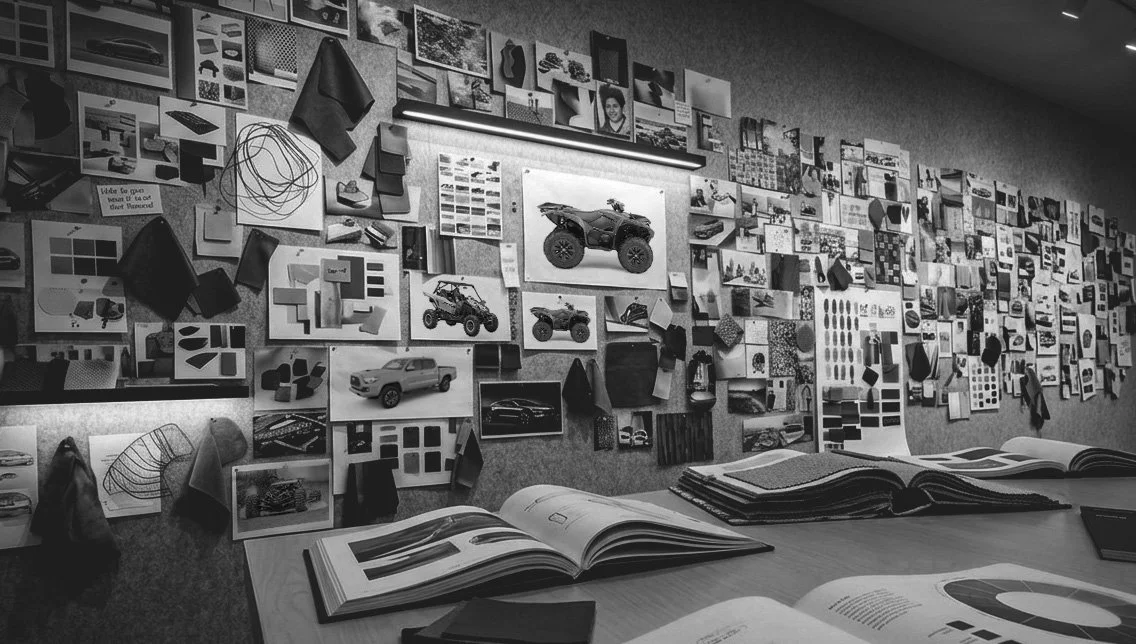
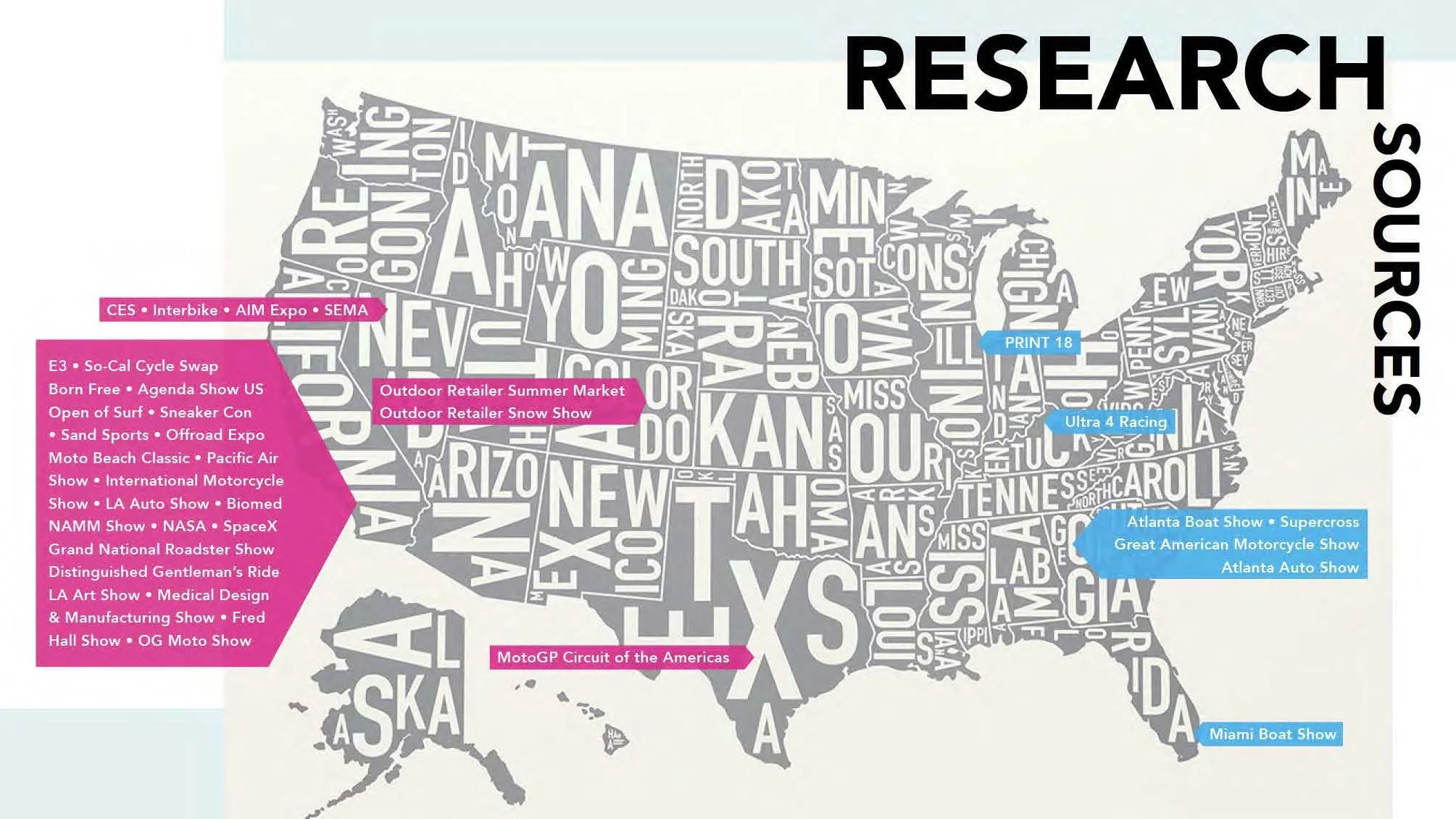
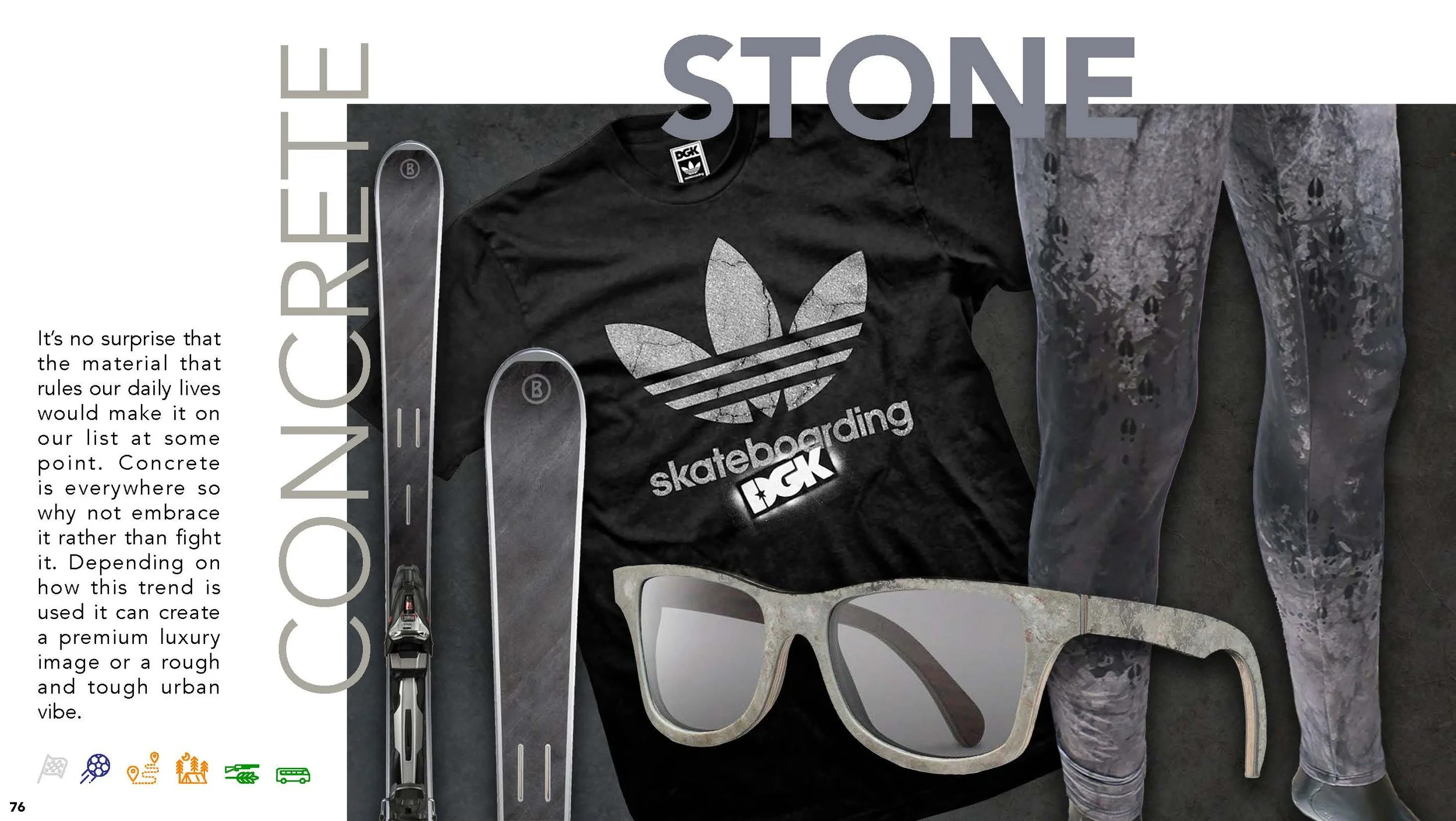
As a designer, the work is never finished. I’m always observing, collecting, learning, and treating everyday life as a continuous source of inspiration. Travel, design events, vehicle culture, architecture, materials, and craftsmanship all feed into this process. I believe every moment presents an opportunity to identify emerging ideas and bring creativity into the world, whether intentionally or subconsciously.
Finding the Common Thread
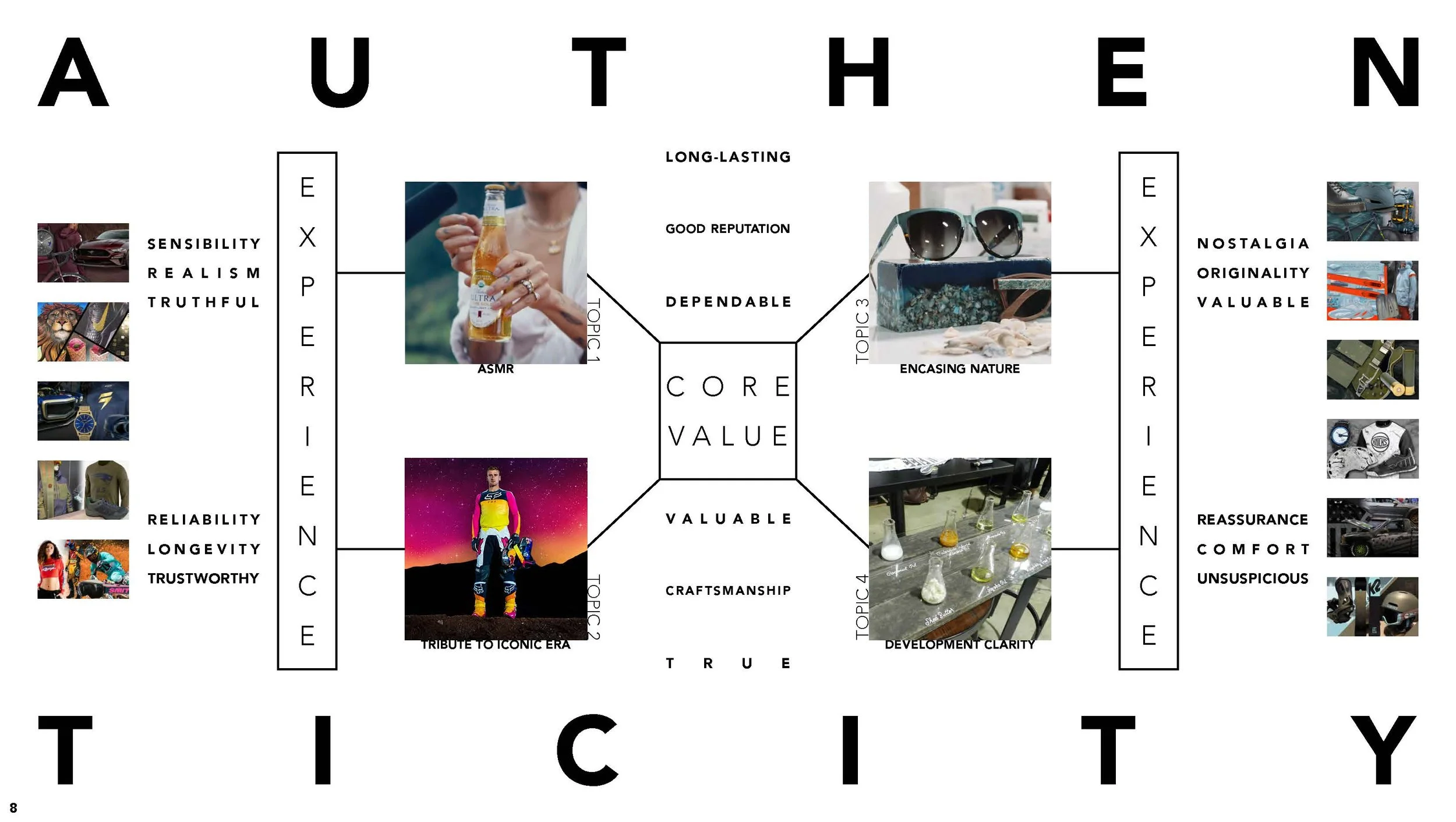
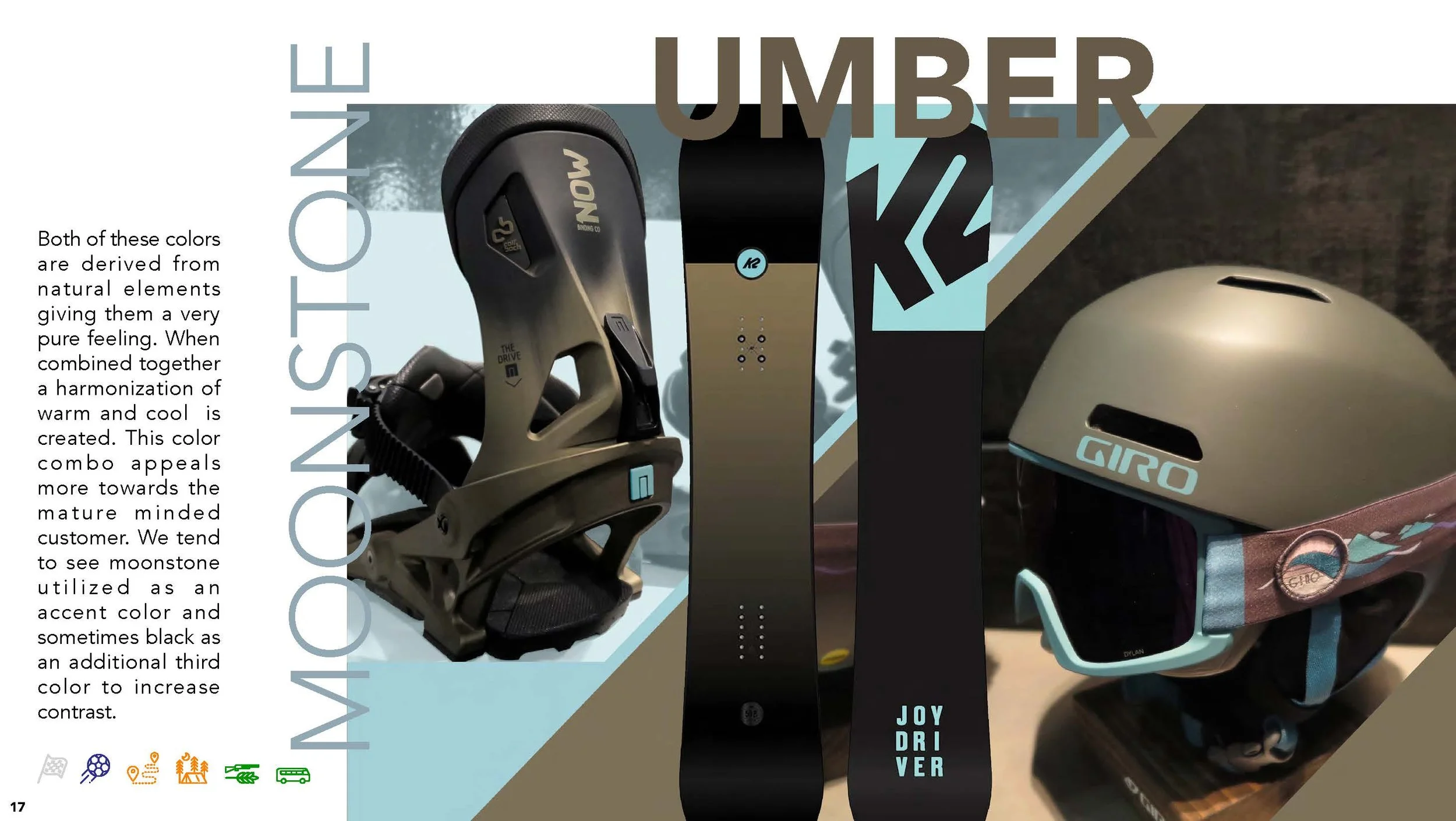
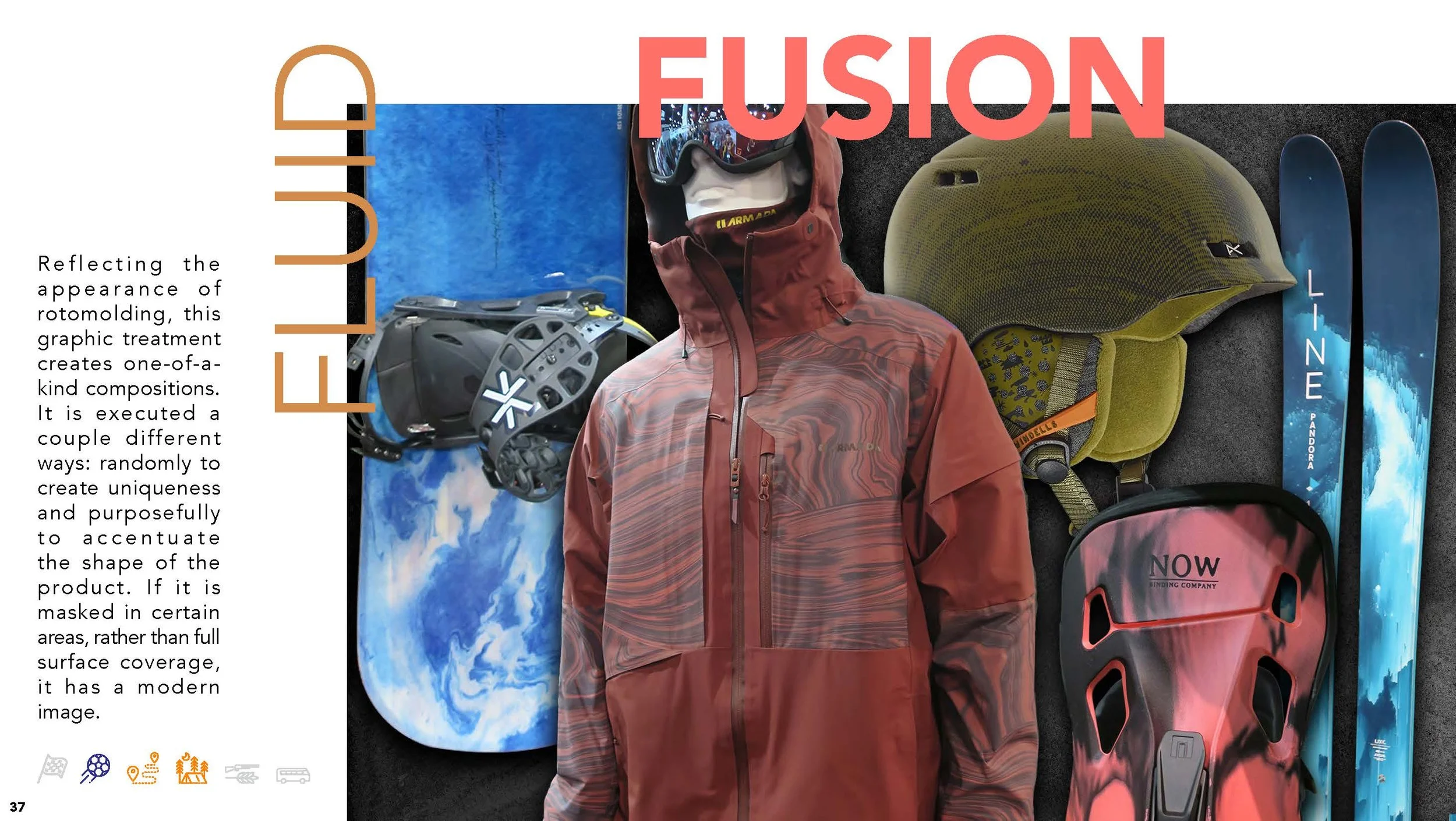
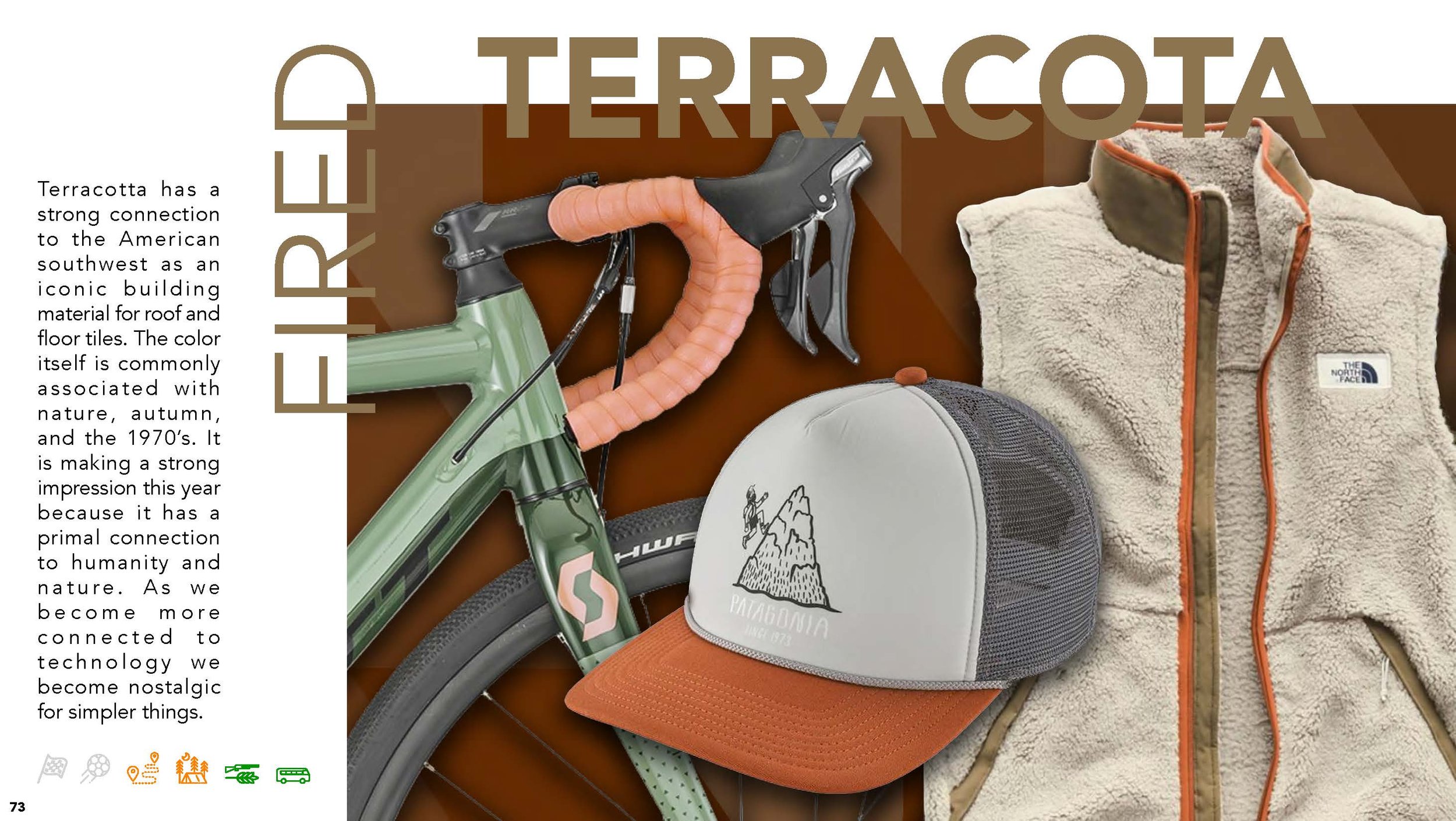
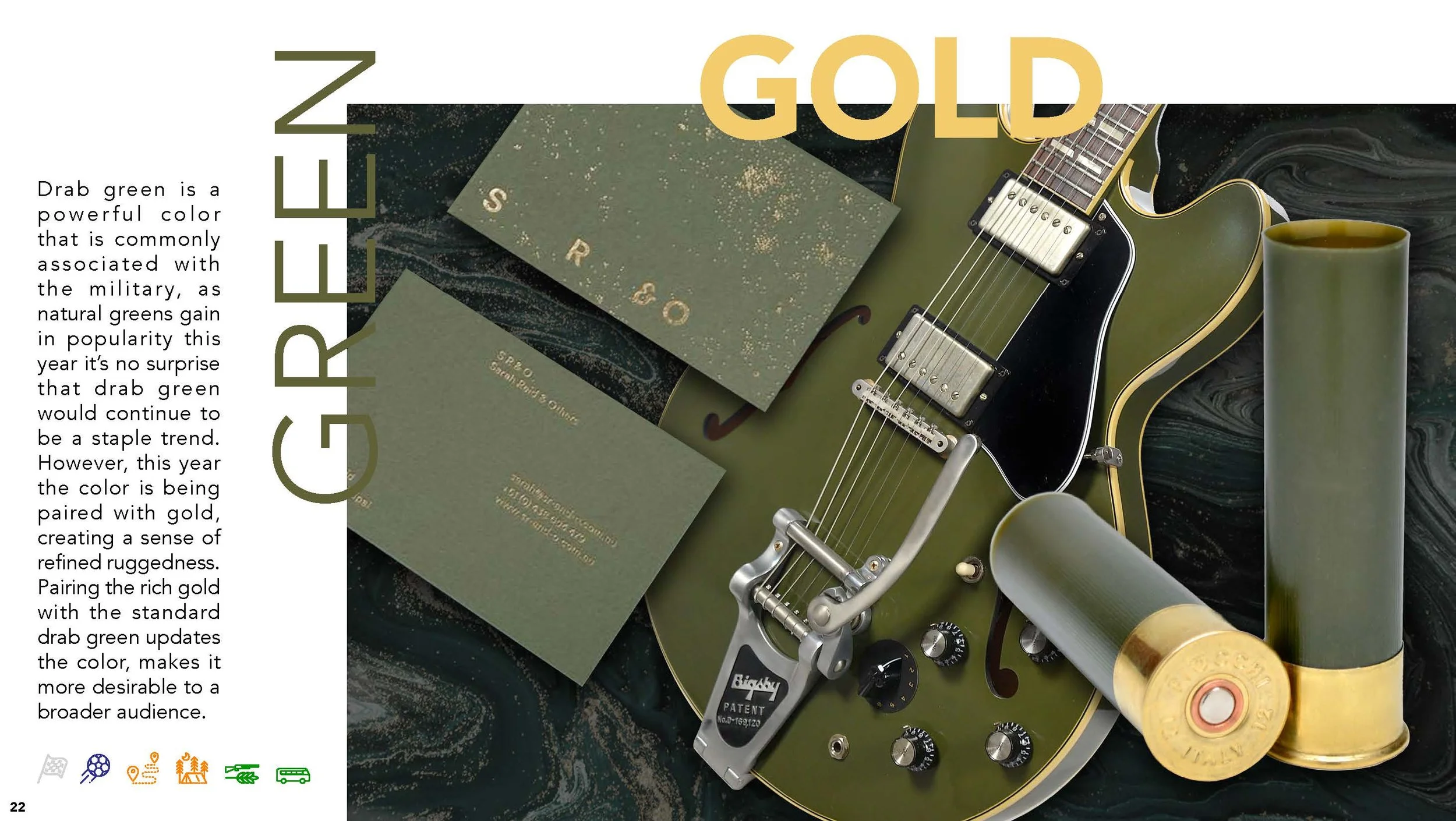
Once trends are identified, I begin looking for patterns. This is where intuition meets analysis. I search for recurring themes across color, typography, texture, form, finish techniques, materials, and visual language. By isolating what consistently appears and just as importantly, what doesn’t I can distill broad inspiration into a focused, intentional direction.
Building the Blueprint
Strong design doesn’t happen without structure. With the common threads identified, I begin building a blueprint that establishes hierarchy, balance, and harmony. This stage defines how individual elements relate to one another and ensures the concept is grounded, cohesive, and scalable before execution ever begins.
Design Time
With a clear foundation in place, it’s time to make. This is where ideas transition from abstract to tangible, pen to paper, screen to prototype, concept to reality. The groundwork allows me to move quickly and confidently, knowing each decision is supported by a thoughtful process rather than guesswork.
Example Number One: Yamaha XT-R
Yamaha set out to introduce a new line of its most aggressive and capable machines under the XT-R moniker, and I was tasked with developing the CMF+G direction that would define their visual identity. The brief was simple: the design needed to reflect the performance and capability of the machines.
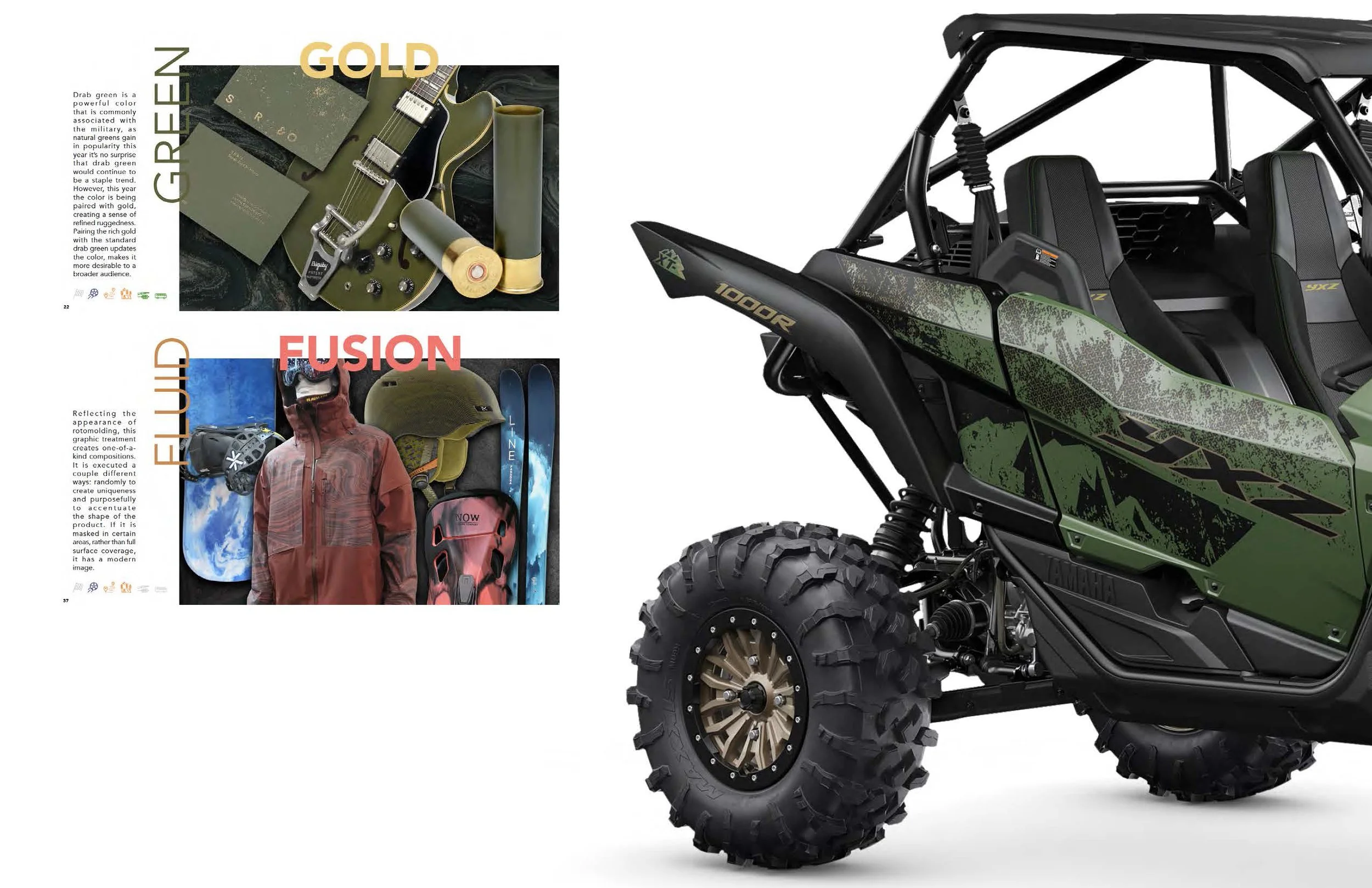
The goal was to create a look that felt both premium and rugged, something refined, yet clearly built for extreme off-road use. I began with a matte metallic green as the foundation, establishing a durable, performance-driven tone. This was paired with a bronzy gold accent, influenced by finishes and materials I had encountered through travel and industry events, adding warmth and a sense of elevated quality.
The graphic language was inspired by fluid halftone patterns I had been tracking as an emerging trend. I reinterpreted these forms to feel more aggressive and durable, aligning them with the expectations of an off-road rider while maintaining a modern visual edge.
This CMF+G direction was ultimately applied across six vehicles, creating a cohesive and impactful showroom presence that resonated strongly with both dealers and consumers.
Example Number Two: Titian Gray
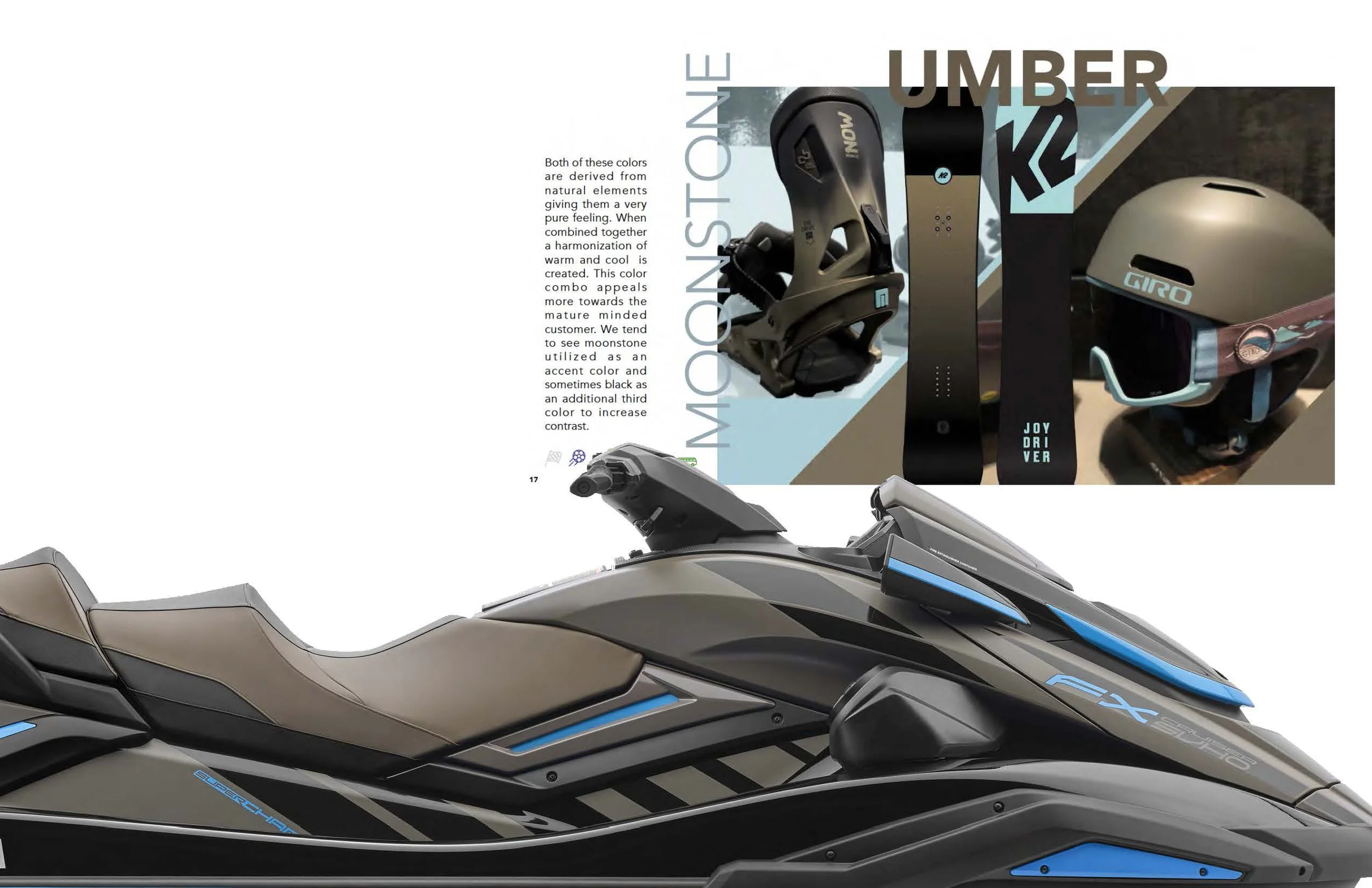
When Audi’s Nardo Gray surged in popularity, nearly every vehicle manufacturer followed with its own interpretation. As the market became saturated, I recognized an opportunity to evolve the gray trend rather than replicate it. Internal focus groups confirmed that gray resonated with the broadest demographic across Yamaha’s customer base so the demand was clear, but differentiation was critical.
Instead of looking to automotive competitors, I studied adjacent markets. In the outdoor and snowboarding space, I noticed a recurring warm, earthy gray-green that felt grounded and premium and paired naturally with blue; which is a signature color for Yamaha. Using this as a foundation, I removed the green undertone and introduced a subtle red bias to create depth and warmth. The result was Titian Gray a refined, modern neutral that stood apart from the cooler, flatter grays dominating the market.
Early reactions were skeptical, with some stakeholders labeling it “brown”, “bland”, and “boring”during the concept phase. But once we produced a full-scale 1:1 vehicle mockup, the nuance and brand harmony became undeniable. Titian Gray went on to become a top-selling color across multiple Yamaha product categories, proving that strategic CMF development can shift perception and drive real results.
Example Number Three: Yamaha XT-R Evolved
The XT-R program quickly became a success, with each model year building strong momentum. The challenge was avoiding repetition and evolving the design without letting it become predictable or formulaic.
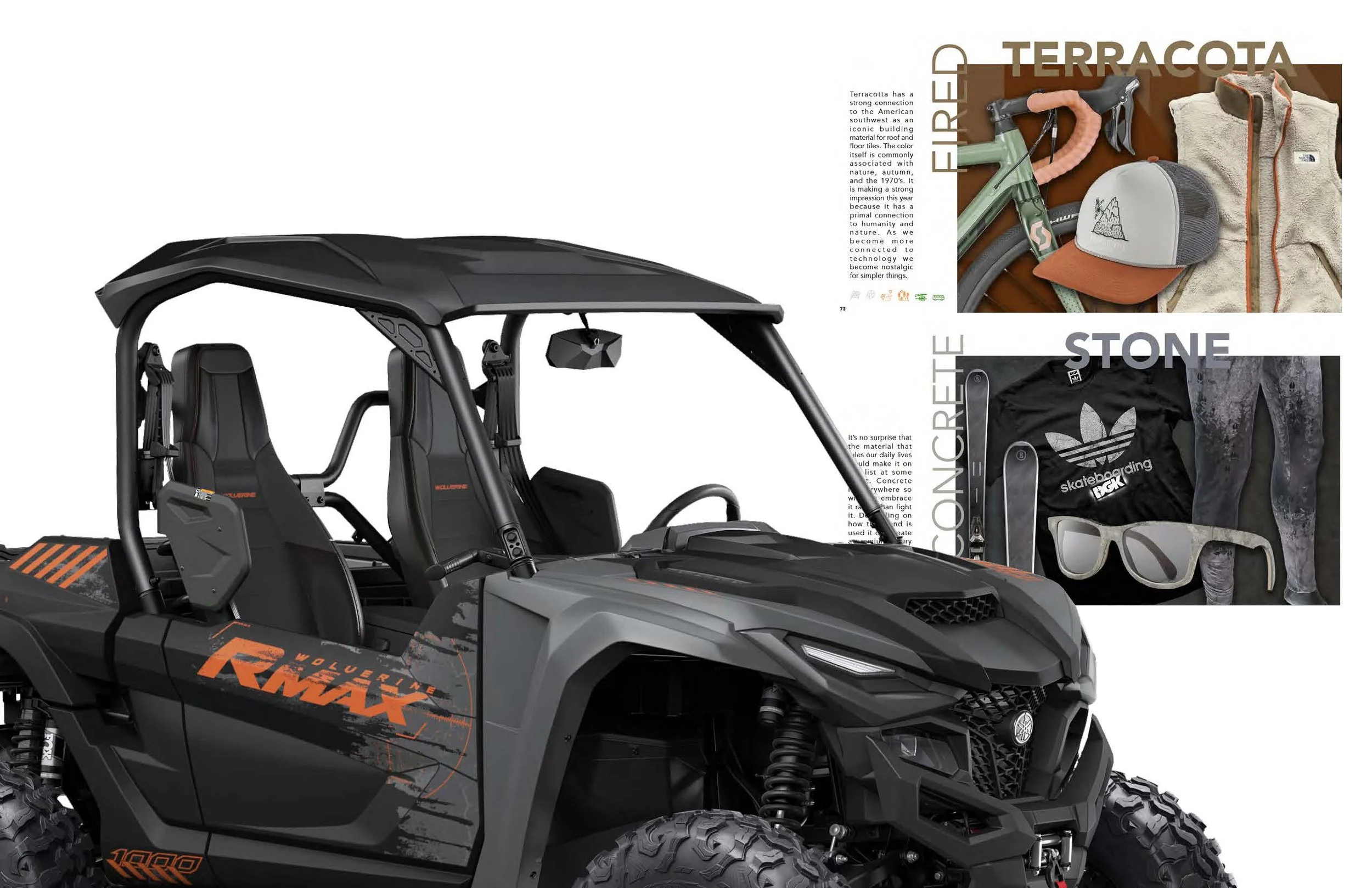
To push the next iteration forward, I looked beyond the category and into the interests of the target consumer. Research showed strong overlap with hunting culture and tactical-style video games, which informed a new graphic direction rooted in precision, layering, and utility-driven aesthetics.
To ground this concept in the machines’ off-road purpose, I developed a CMF palette built around a gloss terracotta orange and gloss metallic gray, balanced with matte black. These choices created a connection to the natural environments the vehicles operate in, while introducing a fresh, more aggressive tone to the XT-R identity.
The result was a clear evolution of the original design and one that felt new without losing its foundation. Dealer and consumer response remained strong, reinforcing the importance of thoughtful iteration in a successful product line.